The Indian film industry is known for its grand narratives, spectacular visuals, and star-studded casts. One of the most notable films in this realm is “2.0,” the sequel to the iconic “Enthiran” (Robot), featuring the legendary actor Rajinikanth. Directed by S. Shankar, “2.0” not only broke box office records but also showcased cutting-edge technology in filmmaking. However, an intriguing piece of trivia has emerged regarding the casting of the film’s antagonist, which could have dramatically altered its trajectory.
The Vision of S. Shankar
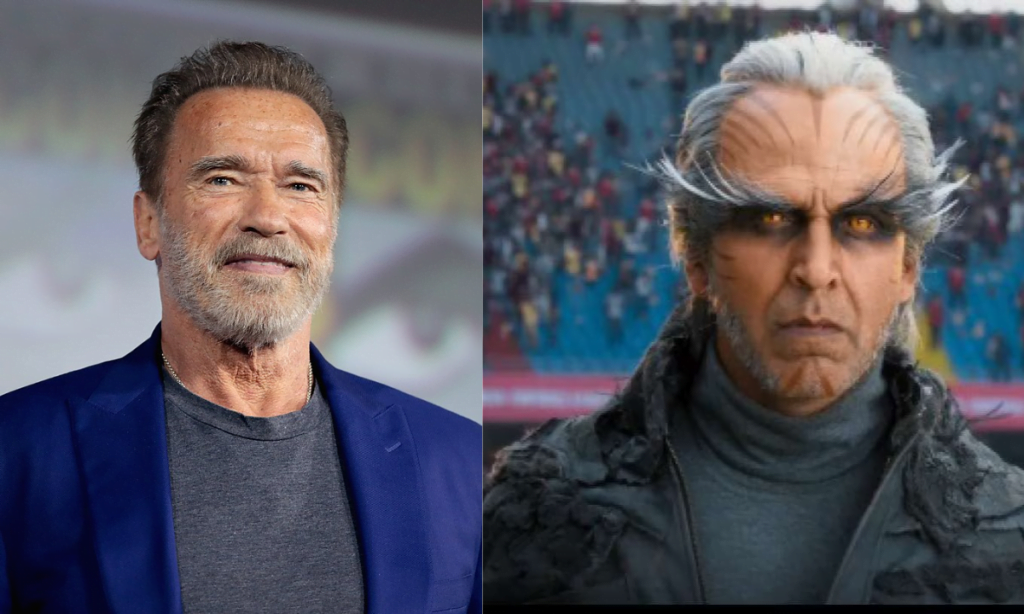
S. Shankar, a visionary director, is known for his ambitious projects that often blend science fiction with social commentary. With “2.0,” he aimed to elevate the narrative by introducing a formidable villain. Initially, the director had his sights set on none other than Hollywood superstar Arnold Schwarzenegger to play the role of the antagonist. This choice was not only ambitious but also indicative of Shankar’s desire to create a global appeal for Indian cinema.
Arnold Schwarzenegger: A Hollywood Icon
Arnold Schwarzenegger, a name synonymous with action films, has had a storied career that spans decades. From his early days in bodybuilding to becoming a Hollywood legend through films like “The Terminator,” “Predator,” and “Total Recall,” Schwarzenegger’s persona embodies strength and charisma. His involvement in “2.0” would have brought a unique flavor to the film, potentially attracting a wider audience and bridging cultural gaps.
The Shift to Akshay Kumar
Despite Shankar’s initial preference for Schwarzenegger, the casting decision ultimately shifted to Bollywood superstar Akshay Kumar. Kumar, known for his versatility and box office appeal, stepped into the role of Dr. Richard, the villain in “2.0.” This change not only highlighted the growing prominence of Bollywood actors in pan-Indian cinema but also reflected the evolving landscape of the Indian film industry, where local stars are increasingly recognized for their global appeal.
The Impact of Casting Choices
The casting of Akshay Kumar over Arnold Schwarzenegger had significant implications for “2.0.”
- Cultural Relevance: Kumar’s portrayal of Dr. Richard resonated with Indian audiences, as he brought a relatable yet menacing quality to the character. His performance was instrumental in making the film a commercial success in India.
- Box Office Success: “2.0” went on to become one of the highest-grossing Indian films of all time. The combination of Rajinikanth and Akshay Kumar proved to be a winning formula, drawing audiences to theaters in droves.
- Global Recognition: While Schwarzenegger’s presence could have potentially elevated the film’s international profile, the success of “2.0” with Kumar demonstrated that Indian cinema can thrive with its homegrown talent.
Behind the Scenes: The Making of 2.0
The production of “2.0” was a monumental task, involving extensive special effects, elaborate sets, and a dedicated cast and crew.
- Visual Effects: The film was noted for its groundbreaking visual effects, which were on par with international standards. This was a significant draw for audiences, showcasing India’s capabilities in high-budget filmmaking.
- Music and Soundtrack: Composed by the legendary A.R. Rahman, the soundtrack of “2.0” added another layer of appeal to the film. The music played a crucial role in enhancing the emotional and dramatic moments throughout the narrative.
The Legacy of 2.0
“2.0” has left a lasting impact on Indian cinema, setting a benchmark for future science fiction films in the country. The film’s success has inspired filmmakers to explore ambitious projects that blend technology with storytelling.
Conclusion
The casting choices in “2.0” reflect the dynamic nature of the film industry, where decisions can shape the trajectory of a project. While Arnold Schwarzenegger was initially considered for the role of the villain, Akshay Kumar’s performance ultimately resonated with audiences, contributing to the film’s monumental success. As Indian cinema continues to evolve, the story of “2.0” serves as a reminder of the potential for collaboration between Hollywood and Bollywood, paving the way for future cross-cultural projects.
Final Thoughts
The tale of “2.0” is not just about a film; it is a narrative of ambition, vision, and the ever-changing landscape of cinema. As audiences continue to embrace diverse storytelling, the possibilities for future collaborations between Indian and international stars remain limitless.