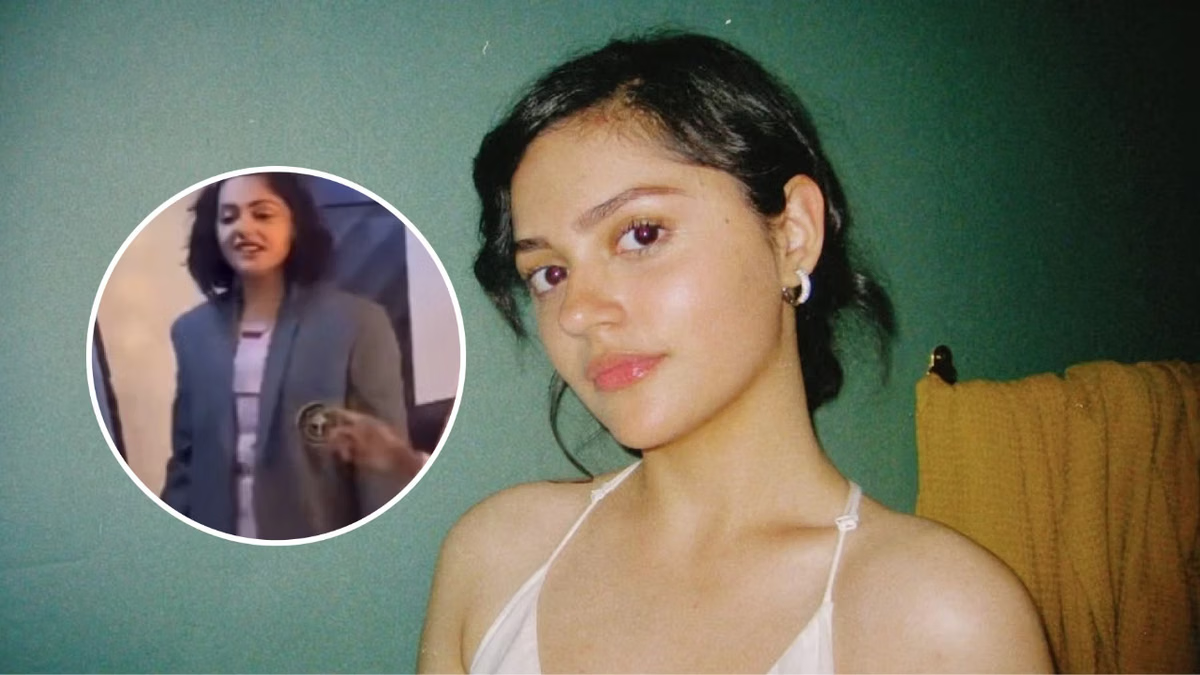
In the ever-evolving landscape of Bollywood controversies, a new storm has emerged around rising star Aneet Padda, the fresh face who recently captured hearts in the musical romance ‘Saiyaara.’ An old video of the actress has ignited passionate debates across social media platforms, dividing public opinion and raising questions about cultural sensitivity in artistic expression. The clip features Padda singing and dancing to ‘Lab Pe Aati Hai Dua,’ a piece some viewers identified as a religious prayer while others defended as secular poetry.
The controversy highlights the delicate balance public figures must maintain in a culturally diverse society, where artistic expression can quickly collide with religious sentiments in our hyper-connected digital age.
The Viral Video That Started the Controversy
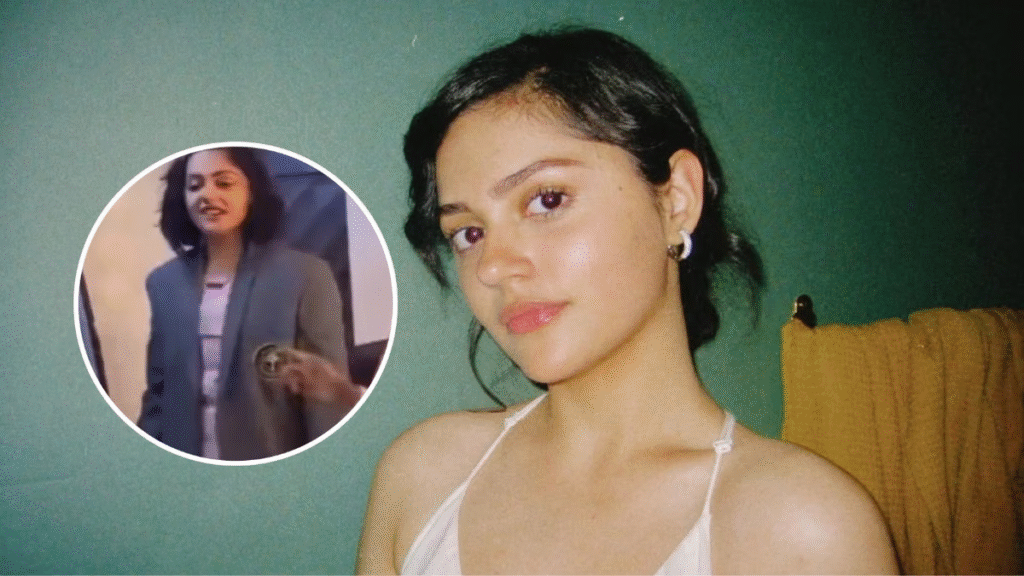
The video causing the uproar appears to be from the sets or promotional activities for ‘Big Girls Don’t Cry,’ the 2024 Amazon Prime series in which Aneet played Roohi Ahuja . In the clip, Aneet Padda, dressed in a school uniform and sporting short hair, can be seen singing the Urdu piece ‘Lab Pe Aati Hai Dua’ in a melodic, song-like manner while grooving to the rhythm .
Her demeanor is cheerful and lighthearted, suggesting she’s enjoying the moment without apparent malice. She is accompanied by another woman of similar age, and both seem to be in high spirits as they recite the verses . This context is significant—the school uniform potentially indicating the video was related to her character in the series rather than a personal social media post.
The Backlash: Accusations of Insensitivity
Almost as soon as the video resurfaced, a segment of social media users expressed strong disappointment and accused Padda of hurting Muslim sentiments .
- “Duniya mein gaane kam padh rahe the kya jo naat pe naach gaa rahe ho?” one user commented, roughly translating to “Were there not enough songs in the world that you had to sing and dance to a naat?”
- Another critique read, “Lagta hai is ko is ki meaning nhi pata …..issi liye y aisa kar rahi hai,” suggesting the actress might not understand the meaning of what she was reciting .
- Some observers specifically accused her of mocking a religious recitation, with one commenter simply stating, “This is very bad. Shame on her” .
The criticism reflects a perspective that certain compositions, regardless of their original context, attain a religious significance that demands solemn treatment.
The Defense: Supporters Clarify the Context
As the criticism gained momentum, an equally passionate defense emerged from Padda’s fans and supporters who provided historical and cultural context.
- Multiple defenders clarified that ‘Lab Pe Aati Hai Dua‘ is not a naat (Islamic devotional poetry) but rather a “bachche ki dua” (children’s prayer) written by poet Muhammad Iqbal in 1902 .
- Supporters emphasized the poem’s common recitation in school assemblies across Pakistan and many Urdu-medium institutions in India, establishing its educational rather than exclusively religious context .
- “She is not making fun of Muslim naat. What @aneetpadda_ and her friend are making fun of is called bache ki dua by Muhammad Iqbal. It’s a form of poetic dua/prayer. It’s recited in schools mostly,” one fan carefully explained .
- Others questioned whether lighthearted engagement with poetic works necessarily constitutes disrespect, with one supporter asking, “Mazak kahan udaya? Can’t she have fun?”
Table: Contrasting Perspectives on the Controversy
| Critics’ Viewpoint | Supporters’ Response |
|---|---|
| Disrespectful treatment of religious material | The piece is educational poetry, not exclusively religious |
| Dancing inappropriate for content type | Common for children to recite rhythmically in schools |
| Hurts Muslim sentiments | Poem transcends specific religious boundaries |
| Demonstrates cultural insensitivity | Context shows school setting, not mockery |
Understanding “Lab Pe Aati Hai Dua”
At the heart of this controversy lies the question of categorization—what exactly is ‘Lab Pe Aati Hai Dua’?
Historical records indicate this work was penned by Muhammad Iqbal in 1902 . Iqbal, also known as Allama Iqbal, was a philosopher, poet, and politician in British India who is widely regarded as having inspired the Pakistan Movement. His body of work includes both philosophical poetry and explicitly religious compositions.
The specific poem in question, often called “Bachche Ki Dua” (Children’s Prayer), was reportedly written for school children to recite at assembly times . This origin story aligns with supporters’ claims that the piece was intended for educational settings rather than exclusively religious contexts.
The composition lives in a gray area between spiritual invocation and cultural poetry—a duality that explains why such contrasting interpretations can coexist simultaneously.
Aneet Padda’s Career Trajectory
This controversy represents Padda’s first significant brush with negative publicity since her rise to fame. Before the success of ‘Saiyaara,’ she:
- Made her Bollywood debut in 2022 with ‘Salaam Venky,’ directed by Revathi and starring Kajol
- Appeared in the 2024 Amazon Prime series ‘Big Girls Don’t Cry’
- Landed her breakthrough role opposite Ahaan Panday in Mohit Suri’s musical romance ‘Saiyaara,’ released in July 2025
Interestingly, Padda has recently opened up about her personal struggles before finding success, telling The Hollywood Reporter: “For three years before this film, I just had terrible anxiety and depression” . This context humanizes the young actress now facing her first viral controversy.
Broader Implications: Art, Religion, and Social Media
This incident raises familiar questions with each new recurrence:
- How should artists navigate cultural and religious materials in their work?
- What responsibility do public figures have to research content before engaging with it?
- Does the resurfacing of old content without context fairly represent intentions?
- Where should we draw the line between cultural appreciation and appropriation?
These questions become increasingly complex in an industry like Bollywood, which routinely incorporates diverse cultural elements into mainstream entertainment.
FAQ Section
What is the poem in Aneet Padda’s viral video?
The video features Aneet Padda singing ‘Lab Pe Aati Hai Dua,’ a poetic work written by Muhammad Iqbal in 1902. The piece is often referred to as “Bachche Ki Dua” (Children’s Prayer) and is commonly recited in school assemblies across Pakistan and some Urdu-medium institutions in India .
Why are some people upset about the video?
Some viewers interpret the piece as a religious Islamic prayer and found Padda’s lighthearted singing and dancing to it disrespectful to Muslim sentiments. Critics accuse her of mocking a religious recitation .
What is the defense being offered for Aneet Padda?
Supporters clarify that the composition is educational poetry rather than exclusively religious content. They emphasize its widespread use in schools and note that Padda was likely engaging with it as cultural, not religious, material .
Has Aneet Padda responded to the controversy?
As of now, Aneet Padda has not made any public statement addressing the viral video or the resulting controversy . The actress has maintained silence on the matter while continuing her professional engagements.
Where was the viral video originally from?
The video appears to be from the sets or promotional activities for ‘Big Girls Don’t Cry,’ the 2024 Amazon Prime series in which Aneet Padda played the character Roohi Ahuja . Her school uniform in the clip suggests it was related to her character portrayal.
Conclusion
The Aneet Padda controversy reflects broader tensions in our culturally interconnected world, where the same piece of content can be interpreted through completely different lenses. What some view as sacred, others see as secular—and in the age of viral content, these collisions are inevitable.
What’s your perspective on such situations? Can we distinguish between intentional disrespect and uninformed engagement? However we answer these questions, one thing remains clear: in our diverse society, cultural literacy is not just an asset but a necessity for public figures and consumers of media alike.
As audiences, we might benefit from pausing to understand context before judgment—a lesson that extends far beyond this single controversy.